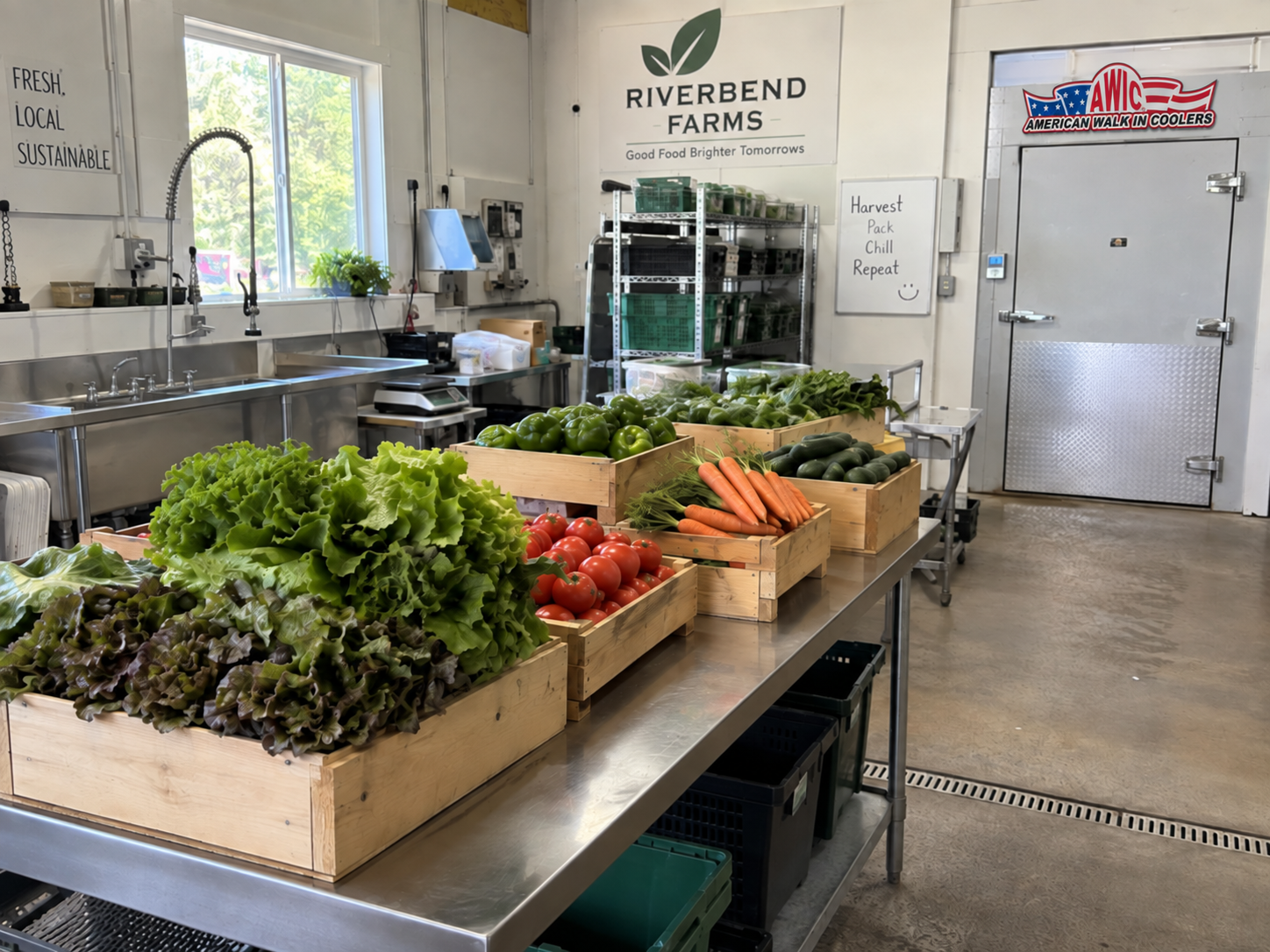
Walk-In Freezer for Garden Harvests: Planning Guide
A walk-in freezer for garden harvests is worth considering when your preserved crop regularly exceeds smaller freezers and needs organized, accessible storage. Start with the amount you will actually freeze, the daily loading requirement, and the available installation space—not simply the size of your garden.
For a modest seasonal surplus, compare a chest or upright freezer first. Larger gardens and homesteads should assess whether their peak inventory justifies a dedicated room, refrigeration equipment, and ongoing operating costs.
Is a walk-in freezer for garden harvests the right fit?
Choose frozen storage for produce intended for preservation, not vegetables you want to keep fresh for immediate use. A freezer also performs a different job from a grow room: one supports harvested-food storage, while the other manages conditions for living plants.
The National Center for Home Food Preservation recommends freezing food at 0°F or below. Its guidance lists approximately 8–12 months for properly prepared and packaged fruits and vegetables stored at that temperature, with shorter storage periods preferred for quality.
Before comparing equipment, divide your harvest into three groups: eat fresh, preserve, and share. Only the portion assigned to freezing belongs in your freezer-sizing estimate.
Size the space around your busiest harvest
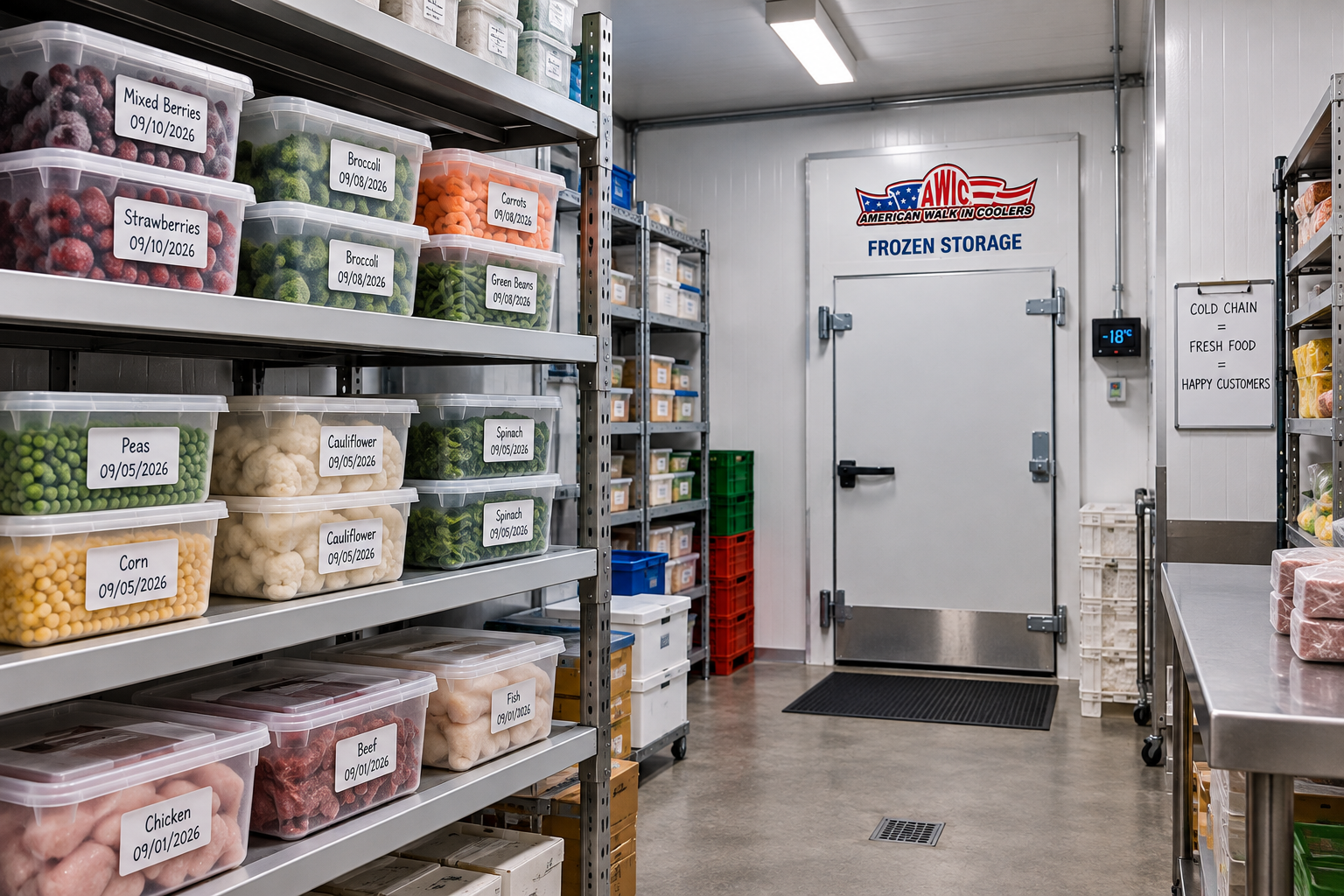
Freezer sizing should account for peak stored inventory and incoming food, not just empty-room dimensions. Record package sizes, quantities, and how quickly you expect to use them.
As an illustrative example, 40 one-liter containers represent 40 liters of nominal container capacity. That is not a 40-liter equipment recommendation: shelving, access, airflow, and the refrigeration load still need separate consideration.
For larger projects, American Walk-In Coolers lists custom cold-storage options at AmericanwalkinCoolers.com/. Take your inventory estimate and proposed location into the discussion so the specification reflects your harvest-preservation routine.
Ask the supplier to distinguish the capacity to hold already-frozen food from the capacity to freeze a new batch. A storage room should not automatically be treated as a rapid-freezing system.
Plan the route from garden to storage
An effective layout connects harvesting, preparation, packing, and storage without making any stage awkward. Improving a controlled growing environment is only part of the job; the harvest also needs a workable destination.
Sketch the route from your growing beds to a suitable preparation area, then to the freezer. Keep garden tools, soil, and chemicals away from food preparation and packaged produce.
Before installation, discuss these details with qualified contractors:
- Space for shelving, door movement, and safe access.
- Electrical requirements and the proposed equipment location.
- Manufacturer-required ventilation and service clearances.
- Floor construction and whether the specification suits an indoor or outdoor setting.
The configurations listed at americanwalkincoolers.com/freezers provide a starting point for comparing freezer features. Confirm the complete specification for your site instead of assuming every option is included.
Compare refrigeration efficiency on the right terms
Compare energy performance between genuinely comparable systems. Equipment size, operating conditions, and usage assumptions should accompany any cost estimate.
When evaluating cabinet-style commercial alternatives, consult ENERGY STAR’s commercial refrigerator and freezer guidance. It reports that certified models are, on average, 20% more energy efficient than standard models.
That figure is not a savings estimate or certification claim for a custom walk-in freezer. Request an assessment for the actual installation, including expected door openings and the quantity and temperature of incoming food.
For budgeting, an illustrative calculation of 10 kWh per day at $0.15 per kWh gives $1.50 per day. Those are example inputs, not measured consumption or a quote for any product.
Prepare and organize produce before freezing
Good frozen produce storage begins with appropriate preparation and packaging. Extra space cannot compensate for treating every vegetable in the same way.
The National Center for Home Food Preservation explains that blanching is needed for almost all vegetables before freezing and that timing depends on the vegetable and its size. Follow the crop-specific instructions rather than using one blanching time for the whole harvest.
Use a simple routine:
- Select suitable produce and follow its preparation instructions.
- Cool and drain blanched vegetables as directed.
- Pack in freezer-suitable containers and label the contents and date.
- Arrange stock so older packages remain easy to find.
Frequently asked questions
Do small gardens need a walk-in freezer?
Not automatically. Compare your actual surplus with smaller freezer options before committing space and money to a walk-in installation.
Can one freezer store fresh and frozen harvests together?
Not while keeping both in their intended condition. Produce meant to remain fresh needs storage conditions appropriate to that crop, separate from frozen inventory.
How do I choose a freezer size?
Measure peak packaged inventory, estimate incoming batches, and have the supplier assess shelving, access, airflow, and refrigeration capacity.
Does ENERGY STAR’s efficiency figure apply to walk-ins?
No. The cited figure concerns certified commercial models and should not be used to predict a custom walk-in system’s performance.
Start with a harvest plan
Before requesting a quote, list what you will freeze, measure your packaged inventory, and sketch the preparation-to-storage route. Use those details to choose equipment that fits both your garden and the way you intend to use its harvest.